Oman is a powerful actor in the world of liquefied natural gas
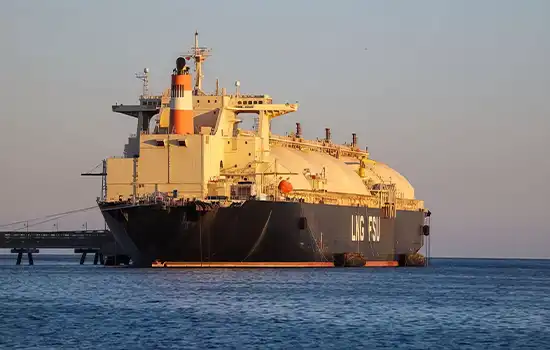
The Sultanate of Oman has steadily and reliably established its position as a significant and dependable player in the global LNG (liquefied natural gas) market. According to the reputable International Gas Union (IGU) report titled “2024 World LNG Report,” released last week, Oman has made significant strides and contributions in the global energy sector.
Last year, Oman succeeded in exporting 11.43 million tonnes of LNG, which accounts for 3% of the world’s total LNG exports. This achievement comfortably positions Oman as the ninth-largest LNG exporter globally. Despite market fluctuations, Oman managed to slightly increase its exports from 11.29 million tonnes in 2022, showcasing the country’s resilience and strategic planning.
Oman’s LNG (liquefied natural gas) has reached numerous key markets, highlighting its crucial role in the global supply chain. The details of Oman’s LNG (liquefied natural gas) exports to different countries are as follows:
| Country | Oman’s natural gas export volume (Million Tonnes) |
|---|---|
| South Korea | 5.08 |
| Japan | 2.19 |
| China | 1.08 |
| India | 0.88 |
| Thailand | 0.63 |
| Taiwan | 0.41 |
| Philippines | – |
| France | – |
| Spain | – |
| Turkey | – |
The report also highlights the high efficiency of Oman’s liquefaction plants. In 2023, these plants operated at an impressive utilization rate of 110%. The three main liquefaction trains in Oman (Oman LNG T1, T2, and T3 Qalhat) have a combined nameplate capacity of 10.4 million tonnes per annum.
These plants, using the AP-C3MR liquefaction technology, are known for their high reliability and performance. The capacity of each T1 and T2 train is 3.55 million tonnes per annum, while the T3 Qalhat train has a capacity of 3.30 million tonnes per annum. The high utilization rate of Oman’s liquefaction plants underscores the country’s strong operational capabilities and its ability to efficiently meet global LNG demand.
The 2024 World LNG Report also provides a broader picture of the global market. Currently, 20 exporting countries and 51 importing countries are connected through the LNG market. Supply constraints remain significant, impacting market growth. After two years of considerable turbulence, the LNG market has reached a new, albeit fragile, equilibrium. The global LNG (liquefied natural gas) receiving capacity has significantly increased, reaching 1,029.9 million tonnes per annum by the end of February 2024. In 2023 alone, about 70 million tonnes were added to this capacity, marking the highest annual increase in new capacity since 2010.
Source: Oman is a powerful actor in the world of liquefied natural gas (zawya.com)