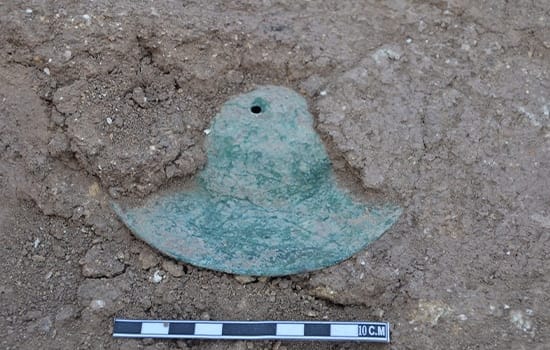
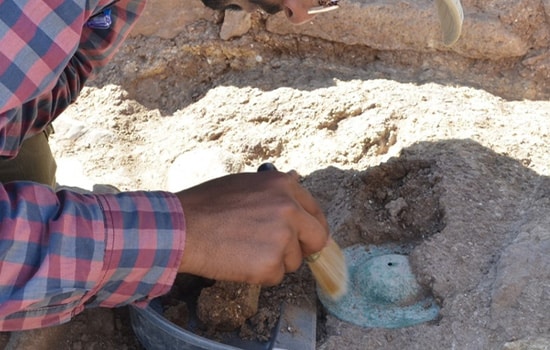
Archaeologists from Sultan Qaboos University, in cooperation with the Ministry of Heritage and Tourism, have uncovered the oldest copper cymbals in Oman during excavations at the Dahwa-7 site, located on the edge of Wadi As-Sukhn in the Wilayat of Saham. These instruments, dating between 2700 and 2000 BCE, are part of a local Omani civilization that thrived over 4,000 years ago.
The findings include a pair of ancient musical instruments in Oman, reflecting a society engaged not only in copper mining but also in agriculture—especially date farming—and livestock rearing. The discovery of imported pottery from the Harappan civilization in the Indus Valley suggests strong trade relations with distant regions.
Among the structures excavated was a small temple situated on a hilltop overlooking the settlement. It featured a yellow-plastered stone table, indicating its use for religious rituals. The temple is considered one of the oldest religious buildings found in the region.
Geochemical analysis confirmed that the copper cymbals in Oman were made from locally sourced copper, likely from areas near Muscat. This archaeological breakthrough, recently published in the UK-based Antiquity journal, has drawn international attention.
The discovery of these ancient musical instruments in Oman not only sheds light on prehistoric cultural practices but also underscores Oman’s historical connections with major ancient civilizations.
News Sources:
-

-

-

-